You Find Your Voice by Using It
What I Keep Getting Wrong About This
For a long time I thought voice was something you either had or didn’t. That some people were just built more direct, more sure, more themselves, and the rest of us were waiting our turn.
A year and a half into this podcast, I don’t believe that anymore.
Almost everyone I’ve sat across from has some version of the same story: a moment where they said the thing anyway, survived it, and were slightly different afterward.
Nobody describes arriving somewhere.
The Room Doesn’t Get to Edit You
I read rooms constantly. Who’s in charge, what the unspoken rules are, what version of me is going to land best.
That instinct isn’t the problem.
The problem is when reading a room turns into letting it rewrite you, quietly trading in whatever made you distinct for whatever seems safest.
Michelle Serna’s episode has stuck with me for this reason. She didn’t find her footing by matching the room. She found it by trusting that what set her apart from everyone in it was exactly what the room needed.
Brittany Burke put a line on this that I haven’t stopped repeating to myself: you have one version of me, and that has to be enough.
Not a work self and a friend self and a conference self, each one a slightly edited release.
Just one.
Courage Is a Repetition, Not a Reveal
Jenn Rinfret talks about bravery in the smallest possible units: a conversation started, a one percent change made, and that’s changed how I think about this too.
Nobody hands you a finished voice to go use.
You use an unfinished one, out loud, before you’re ready, and you find out you survived it. Then you do it again.
That’s the whole mechanism.
Danielle McNamee’s episode added the piece I’d been missing: that saying “I’m struggling” out loud isn’t oversharing. It’s just accuracy. And accuracy is where trust starts, both other people’s trust in you and your own.
Some of the most important things I’ve figured out, I’ve figured out by saying them out loud.
What This Show Has Given Me Instead
The unexpected gift of doing this podcast is hearing myself finish a thought I didn’t know I’d started.
I’ll ask a guest something and land somewhere in their answer that surprises me. Sometimes I hear myself say something back and realize I didn’t know I believed it until I heard myself say it.
That’s made me think community matters less for the advice it hands you and more for the room it gives you to think without an audience yet.
People who let you say the unfinished thing. Who don’t immediately tell you what you should think. Who let you change your mind. Who listen long enough for you to hear yourself.
Tiffany Allen’s conversation about legacy reframed this for me too. We treat legacy like a monument built later. It’s actually just today, in what gets said and what gets swallowed, in who gets encouraged, who gets defended, and who gets named in a room they haven’t walked into yet.
Our voices are part of that ripple.
And once you have a voice in the room, the question changes a little.
It isn’t only, am I willing to use it?
It’s what am I using it for?
You Find Your Voice by Using It
A few weeks ago, I wrote about learning to trust my own voice.
I’ve kept thinking about that since.
What I understand now is that the trust didn’t come first. I didn’t suddenly become sure of myself and then start speaking differently.
I used my voice before I was completely sure of it.
I said the thing, asked the question, let the unfinished thought out, and little by little, I learned I could trust what came out of my own mouth.
Maybe that’s why “finding your voice” has started to feel like the wrong way to describe it.
You don’t find it and then use it. You find it by using it.
And maybe there’s another piece of this too. There are probably things you’ve been saying your whole life. Ideas you keep circling back to. Things you care about enough that you can’t quite leave them alone.
Maybe those things are your voice too. So if you’re still looking for yours, start there. Pay attention to what keeps coming back. The thing you care about enough to say even when the room isn’t quite ready for it.
And then say it. Your voice doesn’t have to be finished before you use it. Maybe it’s been there longer than you realize.
Using it is how you learn to recognize it, trust it, and eventually stop asking the room for permission to say it.
Listen/watch this episode:
Apple Podcasts: https://podcasts.apple.com/us/podcast/finding-your-voice-a-little-at-a-time-with-kcb/id1835167771?i=1000789562747
Spotify: https://open.spotify.com/episode/2DyaTm03sZG04fMu2Zfjgf?si=c7f7db6413a6479a
Listen on YouTube: https://youtu.be/kJ3Gy7KEMgU?si=lQciVzJ2kHk5XNpZ
Watch on YouTube: https://youtu.be/bFL1wkGjoo0?si=UT1FB8RGyvACSKJr
Check out these previous episodes:
Build the Table~Michelle Serna
When Career and Life Grow Together ~ Brittany Burke
Lead with Empathy, Adapt with Purpose with Jenn Rinfret
People First: Resilience, Authenticity, and the Art of the Frenemy ~ with Danielle McNamee
Getting Curious Again: What I Learned Watching My Nieces at the Market
Getting Curious Again
I watched my nieces at the market last week. No plan, no destination, just wandering toward whatever caught their eye. They touched things. They took things apart. Five minutes after meeting a kid they'd never seen before, they were best friends. There was no outcome attached to any of it. They were just out to discover the world.
I don't remember the last time I did that.
Somewhere Along the Way, We Stop Asking
Kids don't care that they don't know something. They just ask. Then we grow up, and we start caring a lot about knowing. We want to walk into a room prepared. We want the answer ready before anyone asks the question. I do the same thing.
I've been turning this over, why that happens, and what we lose along the way.
Curiosity as a Way of Moving Through the World
When Kevin Armstrong came on the show, he told me to stay in discovery mode, to keep asking why. He was right. That's basically how my brain works: why, how, what's next. But the more I've sat with it, the more I think curiosity isn't just about wanting to understand something. It's a way of moving through the world.
Mel Wilhelmi is a good example. She'd hear about something happening in another department and ask, what are you guys doing over there? She wasn't mapping out a five-year plan. She was interested, so she followed the thread, and eventually one of those questions opened a door she hadn't seen coming.
Getting Curious About Your Own Life
Curiosity doesn't only point outward. Sam Bush taught me that. She went through a season where something felt off, she wasn't growing, wasn't learning, and what helped wasn't doing more. She slowed down and got curious about her own life, about the moments she'd felt most like herself, and started noticing what those moments had in common.
That's a gentler kind of curiosity. Instead of immediately deciding what a feeling means, you just notice it. That's interesting. I wonder what that's about.
The Stories We Mistake for Facts
Some of the limits we carry around are real. Life hands us responsibilities we don't get to wish away. But some of them are just stories we've repeated so many times they start to sound like facts. I'm too old for that. I'm not that kind of person. I've never done anything like that before.
Curiosity doesn't argue with the story. It just asks you to loosen your grip on it for a second and consider that maybe there's more room than you thought.
Kim Dallefeld's story is the clearest version of that I've heard on this show. She's lived through so many chapters, changes in technology, in role, in who she is, and she kept learning her way into the next one. Curiosity and resilience, together.
What I'm Asking of You (and Me)
I'm not telling you to blow up your life. You don't have to quit your job or move across the country. Find one place where your life has gotten very certain, and poke at it a little. Read something different. Ask someone a question you've never asked them. Talk to a stranger, or sit alone with your own thoughts if that's the scarier option.
You don't have to know where any of it goes. That's kind of the point.
Get curious about something this week. Follow a thread you wouldn't normally follow, and see what you find there.
Listen in to this episode:
Spotify: https://open.spotify.com/episode/4r0ndJ4PcYnOGsHdgRuj1Y?si=f2fa67776222433b
Apple Podcasts: https://podcasts.apple.com/us/podcast/curiosity-is-a-way-of-moving-through-the-world-with-kcb/id1835167771?i=1000788295453
Listen on YouTube: https://youtu.be/XmUjHTqqnUg
Watch on YouTube: https://youtu.be/H1D6BQej_Zg?si=ZQHXNFkTqMlwIk9M
I referenced several previous episodes in this week’s Coffey Talk:
Episode 27: Purpose Doesn’t Arrive All at Once with Sam Bush
Episode 29: Winning in Today's Marketplace: How to Stay in the Room with Kevin Armstrong
The Rule I Made Before I Knew Better
This week is the one year anniversary of Coffey Talk!
When I started Coffey Talk, I gave myself a rule. Twenty minutes, that's it. I built the whole idea around how long it takes someone to drink a cup of coffee, and I thought that was smart. Tidy. A nice little box to build a show inside of.
It took about six months for that box to stop making sense.
Some stories need the first ten minutes just to get warmed up. Some people need to circle a hard thing three or four times before they can say it directly. I kept hitting the edge of my own rule and cutting people off right when they were getting somewhere real. And at some point I had to admit the rule wasn't protecting the show, it was protecting my own discomfort with letting things run long.
So I let it go.
Learning to Trust My Own Voice
Here's the part I didn't expect. The bigger shift this year wasn't in how I talk to guests, it was in how much of myself I was willing to bring into the room.
For the first several months, my job felt simple: sit, listen, don't get in the way. And that's true, a good chunk of hosting is knowing when to be quiet. But I had someone from the community tell me flat out, we want more of you. And that stopped me for a minute, because opening up isn't always my first instinct. I'm better at holding space for someone else's story than handing over my own.
But I ask people to be vulnerable with me every single week. I couldn't keep asking for that and refuse to do it myself.
So I started asking fewer scripted questions and trusting the conversation more. I started letting my own reactions show up on the mic instead of editing them out. It changed the show. It also changed how I show up in it.
What a Year of Stories Adds Up To
I didn't start Coffey Talk with a mission statement. I started it because I've spent my whole life being the person people tell things to, and I wanted to give that a home. A year in, I keep hearing the same thing back from listeners in different ways. Someone hears an episode about fostering and realizes they know exactly who to send it to. Someone hears a guest talk about a layoff and feels less alone in their own. We are not nearly as different from each other as we're told we are, and a year of these conversations keeps proving that to me on repeat.
I have no idea what year two looks like exactly. I know there's a book coming, built from a year of prompts I've already written. I know I'll keep breaking rules I set for myself once they stop serving the thing that actually matters. That feels like the whole point.
The one-year anniversary is a special one! My husband, Sterling Bacon, joined me to look back and chat about what’s next for Coffey Talk.
You can find links to the episode below, or tune in anywhere you access your podcasts.
Spotify: https://open.spotify.com/episode/3iMuX6U4N56rJTwXcm9LR1?si=cc21898313fd4863
Apple Podcasts: https://podcasts.apple.com/us/podcast/one-year-of-coffey-talk-the-conversation/id1835167771?i=1000785540964
Watch on YouTube: https://youtu.be/865o8ZUKIDA?si=i_Sh3JsHmv1zXFw4
Listen on YouTube: https://youtu.be/R_9O47vFGmw?si=OtCaCzSj1AcZ298v
Intentional Living: What a Conversation About Screens Taught Me About Presence
I thought this conversation was going to be about phones. It ended up being about where I put my attention when life gets hard, and what I want to do differently now.
The season I almost postponed this conversation
I had to pause this show for a while before Tom Campbell and I recorded. I lost one of my dads, and a few weeks later, my husband's mother passed too. It was a lot, back to back, and there were points where I genuinely didn't know when I'd come back to Coffey Talk.
Tom was patient with me through all of it. And when I finally sat down with him, I realized he'd already written the book I needed during that exact season.
It's not really about the phone
Tom's book is called Gotta Look Up, and on the surface it sounds like another warning about screen time. It's not that. It's about what we miss when we stop paying attention to our own lives, whether the distraction is a phone or a job or a version of success we borrowed from someone else.
He told me technology is a tool. Whether it improves your life or controls it depends on the choice you make with it every single day. That's a small sentence, but I haven't stopped thinking about it.
Quicksand, joy, and where you're headed
Tom talked about three ideas he built for himself during his hardest years: Life's Quicksand, Trees of Joy, and Anchors of Hope.
The quicksand is whatever you're stuck in. A divorce, a job that isn't working, a version of yourself you don't recognize anymore. He said the instinct is to thrash, and thrashing is what makes you sink faster.
The trees of joy are the small things that pull you back to yourself. For Tom, that was animals, hiking, and eventually writing. For me, it's been service. When I'm at my lowest, showing up for someone else has always brought me back faster than anything I could do for myself alone.
The anchors of hope are the future you're actually building toward. Not the crisis you're surviving. The life you want on the other side of it.
Where I've used this without knowing it had a name
My youngest left for college a few years ago, and I remember being surprised by how hard that transition hit me. Not because I didn't want her to go. I did. But I had worn the role of day-to-day mom for so long that losing it, even for a good reason, shook something loose.
I didn't have language for it then. I just knew I needed to plug back into my community and find new places to serve. Looking back, that was me planting trees of joy without calling them that.
That's the thing about a conversation like this one. It doesn't give you new problems. It gives you words for the ones you've already lived through.
What I'm carrying forward
Presence is a choice. I want to be where my feet are, and I want to notice the abundance that's already around me instead of waiting for a crisis to remind me it's there.
I don't think that means throwing out technology or pretending screens are the enemy. It means asking, every day, whether the thing in my hand is adding to my life or quietly running it.
That's the question I'm sitting with this week. I'd love to know what you're carrying forward too.
You can listen to this episode on:
Apple Podcasts: https://podcasts.apple.com/us/podcast/gotta-look-up-with-tom-campbell/id1835167771?i=1000783902472
Spotify: https://open.spotify.com/episode/7KxxBE8bgebbk4SvaVvBbO
YouTube: https://youtu.be/gpsvyNgeTyY?si=YMzTRe02XNoiiJV6
Or anywhere you get your podcasts.
The Nervous Ones Are Usually the Ones Who Care Most
I used to think being nervous before a stage meant I didn't belong there. A conversation this week made me rethink that.
I get nervous before almost every stage I step onto. It doesn't matter if there are ten people in the room or a thousand. Earlier this year I introduced two women I admire deeply, and my hands were shaking before I said a single word. Someone standing next to me offered me a margarita and told me she never expected me, of all people, to be that nervous.
I used to think that feeling meant something was wrong with me. That the people who belonged on a stage were the ones who felt steady walking into the room.
The Class With Eight People and One Woman
My guest this week told me about a networking class she took in her thirties. Eight students, one instructor, and she was the only woman in the room. For almost a month, she didn't speak. She wrote her questions down instead of asking them out loud, convinced that opening her mouth would prove she didn't belong there.
She was the only one who passed the certification exam at the end of it.
That detail tells you more about confidence than any speech could.
Quiet Isn't the Opposite of Capable
We tend to treat quiet like it's a problem to fix. Like the goal is to get loud enough, confident enough, polished enough to finally earn a seat at the table. But the people who've actually built something worth building are usually the ones who were doing the work long before anyone was watching.
What Building Without an Audience Looks Like
Long before there was a community around her, my guest was building an app for her dad's cattle business, just to make his life a little easier. No audience, no launch plan, no announcement. Just a real problem and a willingness to try.
That's usually where confidence actually comes from: the small, unglamorous reps nobody sees, long before there's a stage involved.
Starting Is the Whole Skill
I don't think I'll ever stop getting nervous before I speak. I've made peace with that. What changed is what I do with the nerves. I say the first word anyway, and I let the rest follow.
If you're waiting to feel ready before you start building, sharing, or speaking up, that feeling doesn't usually arrive on its own. You start first. The confidence catches up later, if it shows up at all. Either way, you're already building something that matters.
Check out this episode of Coffey Talk with Shawn Sissenwein:
It's Never Too Late to Build a Life That Actually Fits You
There's no real deadline on building a life that fits you. Kate reflects on why starting over, at any age, is worth it.
There's a voice in my head that still keeps a schedule for my life, one I never actually agreed to. The degree by this age, the career by that one, the version of yourself you're supposed to be settled into by now. Nobody handed me that timeline. I just picked it up somewhere along the way and started measuring myself against it.
I don't actually believe in that timeline. Most of the paths I've taken have looked late, or different, or out of order compared to what I thought they'd look like by now. But the voice still shows up sometimes.
This week's guest on the show, Yuliya Kuklina, heard a version of that same voice. She was in her 30s, learning an entirely new industry, sitting in a room with people years younger than her, and she kept thinking she was too late. Like she'd already missed the window where this was supposed to happen for her.
She wasn't too late. She's built a whole career now doing work she actually looks forward to. None of the years before that were wasted. They were just early chapters she hadn't recognized the use of yet.
The Timeline We Think We're Supposed to Follow
Somewhere along the way we absorb a schedule for our own lives that nobody actually wrote down. Graduate by this age. Settle into a career by this age. Figure it out by this age. When we miss a mark on that invisible schedule, it feels like proof that we're behind, instead of proof that the schedule was never real to begin with.
Age Is Not a Deadline
The "too late" feeling rarely comes from evidence. It comes from comparison. You look around the room, notice everyone looks younger or further along, and your brain fills in the rest of the story before you've actually tested whether it's true.
What Actually Makes a Life Feel Like Yours
The people I talk to on this show who've rebuilt their careers later than they expected rarely describe it as catching up. They describe it as finally building something that fits, on their own terms, without a race stapled to it.
This is part of why I'm proud of our partnership with TechFluent Academy. Their whole program is built around the idea that age, background, or a missing degree shouldn't decide whether someone gets to do meaningful work. If you want to see what that looks like in practice, you can find their programs at techfluentacademy.org.
The Only Real Deadline
There isn't one. That's the part I actually want you to hear, not just read past. Whatever chapter you think you started too late, you didn't. You started when you started, and that's the only version of the timeline that was ever true.
It's Never Too Late to Build a Life That Inspires You with Yuliya Kuklina
The Question Underneath Everything
I have had this conversation more than once. The job changes, the title shifts, and suddenly the question is: who are you now? Katie Erickson sat with me on Coffey Talk and reminded me that we have all been rehearsing this answer longer than we think.
There is a version of this question that shows up at every career transition, every layoff, every time the role you have been playing for years just ends. It sounds simple: who are you when the job is gone?
Katie Erikson spent ten years as a content marketer inside the Microsoft Business Central and Biz Apps world, survived a revolving door of bosses, watched AI move into her lane, and built something real in that space. Then her position was eliminated. And she said something honest: I know my job does not define me. Now I am having to put that into practice.
That gap, between what you believe and what you live, is the thing I keep returning to.
We Have Been Rehearsing This Longer Than We Think
Katie talked about holding loosely to identity all the way back to high school. Cheerleader. Oldest of five. Journalist. Marketing writer. Mom. Each one a real part of who she was. Each one something she eventually had to set down or transform. She said: life is all about transitioning, and you have to hold loosely to whatever your identity is at the time, because it is very likely to change.
I think most of us know this. We have lived versions of it. The job that ended, the role that changed, the season that closed. But knowing it and being genuinely unshaken by it are two different things. The rehearsal is not the performance.
Katie is not performing. She is in the middle of a real transition right now, and she is applying what she has been building toward her whole life. That is not a small thing.
Flexibility Is a Skill, Not a Trait
This is something I actually said in our conversation and I want to say it again here because I mean it. Flexibility is not a personality type you either have or do not have. It is something you build, and you build it through the hard chapters.
I am not a naturally flexible person. I have had to learn how to be. Katie said the same about herself. She likes a schedule, likes to know what is coming, and finds uncertainty genuinely uncomfortable. And she has built, through a decade of change, a real capacity to go with the flow when she needs to. Not because she stopped caring about stability but because she learned what is actually worth holding onto and what she can let go of.
That discernment is what flexibility actually looks like in practice. Not having no preferences. Knowing which ones to defend.
What You Protect When the Ground Shifts
Katie blocks her calendar every day from three to five. Not because she stops working. Because that is when her teenage boys come home and she knows the window is short. She said: if you miss it, it is gone. By five-thirty they are off in their own world.
That is not a work-life balance tip. That is someone who knows her priorities so well that they show up in her calendar before anything else can fill it.
She talked about faith the same way. As the thing that holds everything together when everything else is moving. The connective tissue, I called it in the conversation. She said: if I did not have my faith, I think I would be a very insecure person. For Katie, faith is not one item on a list. It is the frame around the list.
I think that kind of clarity, knowing what you will not negotiate on, is actually what makes it possible to be flexible about everything else. You can bend because you know what cannot break.
The Behind-the-Scenes People
Katie described herself as a good second. Someone who does the work that makes everything flow, even when no one notices it is being done. She said: you do not necessarily know the importance of it until it is gone.
There are a lot of people in this industry like that. People who are excellent at something that does not come with a spotlight. And they can sometimes spend years measuring their worth by whether the recognition shows up. It usually does not, and that is its own kind of hard.
What Katie has is something I think you only get through doing the work and deciding, over and over, that it is worth doing. A confidence that does not depend on whether it gets seen. That is not something you are handed. You earn it.
What This Conversation Left Me With
I always say that your job is not your purpose. I say it because I believe it and because I have watched people I care about tie themselves so tightly to a role or a title that when it changes, they do not know what is left.
Katie's story is a good reminder of why the work of knowing yourself beyond your job title is not optional. It is not something you do when the transition comes. You have to be building it all along, through the stability and through the hard chapters, so that when the ground shifts, you have something to stand on.
She is doing that work right now, out loud, in the middle of it. That takes real courage. And I am grateful she came on and shared it.
You can watch or listen to this episode here:

What Hard Seasons Actually Teach Us About Leadership
I have been thinking a lot lately about what we carry into our leadership that we never planned to bring. The stuff that showed up because life handed it to us, not because we sought it out.
A theme in my last few episodes has been around the things carry into our leadership that we never planned to bring. The stuff that showed up because life handed it to us, not because we sought it out. So naturally, it’s been top of mind for me - not in a way that feels heavy, but in a way that feels clarifying.
I am not talking about a professional development course or a leadership book. I am talking about the seasons that changed you. The ones that required something of you that you did not know you had.
The Version of Yourself You Had to Leave Behind
I think most of us can point to a version of ourselves we outgrew. The leader we were before something cracked us open a little. Before we went through the thing that taught us patience we did not know we needed, or empathy we thought we already had.
The honest truth is that I used to think empathy was something you either had or you did not. Like a personality trait, fixed and finished. What I understand now is that empathy deepens. It grows with experience. Specifically, it grows when you have been through something hard enough that you stop assuming other people's lives look like yours from the outside.
That shift does not happen from reading about it. It happens from living it.
What Uncertainty Does to a Control Freak
There is a particular kind of difficulty that comes from going through something you cannot control, manage, or strategize your way out of. And if you are the kind of person who moves fast, sets high expectations, and runs toward challenges, that kind of uncertainty is its own education.
I have come to believe that the leaders who handle complexity and ambiguity best are not the ones who were born unshakeable. They are the ones who went through something that forced them to develop that muscle. Who had to learn, because there was no other option, how to keep functioning when the outcome was not guaranteed.
That is a different kind of resilience than the kind you get from a keynote.
Empathy Is Not a Soft Skill
I want to push back on the idea that empathy is something we bring to work despite professionalism. I think it is one of the most strategically undervalued things a leader can develop.
In partnership work, in team leadership, in any relationship where trust is the currency, the people who get the furthest are almost never the ones who played it most strategically. They are the ones people actually wanted to work with. The ones who showed up as real humans and made it safe for others to do the same.
There is a reason trust is hard to build and easy to lose. It requires consistency and a genuine interest in the person across from you. Not performing interest. Actually having it.
Building the Bigger Table
There is a difference between scarcity thinking and abundance thinking in leadership, and how much the hard seasons we go through can shift us from one to the other.
When you have been through something that stripped away the noise, you tend to get clearer on what actually matters. On who you want in your corner. On what kind of leader you want to be when things get hard.
And I think that clarity is what makes some people builders and others hoarders. The ones who go through difficulty and come out more generous, more connected, more committed to making room for other people at the table.
That is not an accident. That is the work.
What I Am Taking From This
I walked away from this conversation thinking about the moments in my own career where I had to unlearn something I thought I knew. The expectations I had to revise. The version of tough that I had to trade in for something more honest.
And I am reminded that the hardest seasons do not just happen to us. They happen for us, if we are willing to let them. Not in a toxic positivity way. In a real way.
The lessons you take from the muck are the ones that actually stick.
Check out the full episode: People First: Resilience, Authenticity, and the Art of the Frenemy ~ with Danielle McNamee on Apple Podcasts.
Or watch it on YouTube.
We got our first review!
Tal Gur emailed me and said I was doing good work, and they wanted to feature Coffey Talk! I was estatic!
Here’s the review they left:
What story has the power to shift the way we see ourselves, our work, and the people around us? In Coffey Talk, Kate Coffey-Bacon creates a welcoming space where meaningful conversations, personal reflections, and authentic human experiences come together to inspire growth, connection, and deeper understanding.
What is the Podcast About?
Coffey Talk is built around a simple but powerful idea: people connect through stories. Hosted by Kate Coffey-Bacon, the podcast invites listeners into thoughtful conversations with entrepreneurs, professionals, leaders, creatives, and everyday individuals who share the experiences that have shaped their lives. Rather than focusing solely on achievements or success stories, the show explores the challenges, turning points, lessons, and moments of self-discovery that often happen behind the scenes. Each episode feels like sitting down with a friend over coffee and engaging in a conversation that is honest, reflective, and deeply human.
What makes the podcast especially engaging is its ability to blend professional insight with personal growth. Guests discuss topics such as leadership, purpose, mentorship, resilience, career transitions, community building, authenticity, and the pursuit of meaningful work. Whether the conversation centers on entrepreneurship, personal development, technology, or life lessons, the focus consistently returns to the people behind the stories. The result is a podcast that encourages listeners to slow down, reflect on their own journeys, and find inspiration in the experiences of others.
Podcast Details
Category: Self-Improvement
Frequency: Varies
Starting Year: 2025
Language: English
Podcast Creator
Kate Coffey-Bacon is a storyteller, marketing professional, strategist, and podcast host whose passion for meaningful human connection serves as the foundation of Coffey Talk. Drawing on years of experience helping organizations and individuals communicate their ideas effectively, she brings curiosity, empathy, and thoughtful listening to every conversation. Her goal is not simply to interview guests but to uncover the deeper stories, lessons, and perspectives that can encourage listeners to see their own lives differently. Through the podcast, she has created a space where authenticity is valued over perfection and where genuine conversations become a catalyst for growth and reflection.
Core Theme
At its heart, Coffey Talk explores the idea that growth happens through connection. The podcast consistently highlights how personal and professional development are shaped not only by goals and achievements but also by relationships, challenges, failures, and moments of vulnerability. Through conversations with diverse guests, listeners are reminded that meaningful progress often emerges from experiences that are messy, uncertain, and deeply personal. The show celebrates curiosity, resilience, and the willingness to keep moving forward even when the path is unclear.
Another recurring theme is the search for purpose and authenticity. Many episodes examine how individuals discover what truly matters to them, whether in their careers, businesses, communities, or personal lives. Rather than promoting a one-size-fits-all formula for success, the podcast encourages listeners to define fulfillment on their own terms. It emphasizes that purpose often reveals itself gradually through experience, reflection, and a commitment to staying aligned with one’s values.
Podcast Takeaways
Some key lessons from the Podcast:
Purpose is often discovered through experience and reflection rather than through a perfectly designed plan.
Authentic relationships create opportunities for both personal and professional growth.
Mentorship can help individuals recognize strengths and possibilities they may not see in themselves.
Success becomes more meaningful when it remains connected to personal values and community impact.
Resilience develops through navigating challenges, uncertainty, and periods of transition.
Leadership is strengthened by empathy, trust, and genuine human connection.
Growth is an ongoing process that requires curiosity, adaptability, and a willingness to keep learning.
Podcast Strengths
One of the podcast’s greatest strengths is its ability to create conversations that feel both intimate and insightful. Kate Coffey-Bacon has a natural interviewing style that encourages guests to move beyond surface-level talking points and share meaningful experiences with honesty and depth. The show balances practical lessons with emotional intelligence, making each episode informative without feeling overly instructional. Its diverse range of guests and topics also ensures that listeners are exposed to a variety of perspectives while remaining connected to the podcast’s central focus on personal growth and authentic storytelling.
Who This Podcast Is For
This podcast is ideal for professionals, entrepreneurs, leaders, lifelong learners, and anyone who enjoys thoughtful conversations about growth, purpose, and human connection. It will particularly resonate with listeners who appreciate personal development content but prefer real-world stories over rigid self-help formulas. Those navigating career transitions, leadership challenges, or periods of personal reflection will find valuable insights and encouragement throughout the series.
Why Should You Listen To This Podcast?
Coffey Talk offers far more than interviews or career advice. It provides a refreshing reminder that behind every accomplishment is a human story filled with uncertainty, learning, and transformation. By listening to the experiences of people from different backgrounds and industries, you gain practical wisdom, emotional perspective, and renewed motivation for your own journey. The conversations are relatable, inspiring, and often leave listeners with new ways of thinking about success, purpose, and connection.
Questions This Podcast Helps Us Explore
How do we discover our true purpose when life rarely follows a predictable path?
What role do relationships and community play in shaping personal and professional success?
How can we remain authentic while pursuing ambitious goals and opportunities?
What lessons can failure, uncertainty, and transition teach us about growth?
How do meaningful conversations change the way we understand ourselves and others?
Concluding Thoughts
Coffey Talk stands out as a podcast that values genuine human connection in a world often dominated by noise and superficial interactions. Through thoughtful storytelling and engaging conversations, Kate Coffey-Bacon creates a space where listeners can pause, reflect, and discover lessons that apply not only to work and leadership but also to everyday life. The stories shared throughout the podcast remind us that growth is rarely linear and that some of our most important insights come from listening to the experiences of others.
For anyone seeking inspiration, perspective, and a deeper appreciation for the power of authentic conversation, this podcast offers an enriching listening experience. Its blend of personal reflection, practical wisdom, and heartfelt storytelling makes it a valuable companion for those looking to navigate life with greater clarity, purpose, and connection.
From Kate:
Thank you to the Elevate Society team for this! It means so much to me. You can find the review here: https://elevatesociety.com/coffey-talk-podcast-review/

The Table
I've been building community my whole adult life. Or at least I thought I was. This conversation made me ask a harder question.
Setting the Table vs. Making Room
I've been building community my whole adult life. Table setter. That's how I think of myself. It's how Khaled Nassra thinks of himself too, and it's one of the reasons our conversations always go a little longer than planned.
But in the middle of our Coffey Talk episode together, he said something that stopped me cold.
He talked about learning, over years of leading teams, traveling, and arriving in new places over and over again, that he had a habit of setting the table in a way that worked for him. That felt welcoming to him. That made sense through his lens. And only slowly did he start asking whether the table he was setting actually had room for everyone he was trying to welcome in.
I said it out loud on the recording: that was a mentor moment. Because I recognized myself in it immediately.
The Difference Between Open and Accessible
There's a version of community building that's really just hospitality on your own terms. You open the door. You make it warm inside. You genuinely want people to come in. But you haven't thought hard enough about who might be standing outside looking at that door and deciding it's not for them.
Khaled gave a real example. At a conference, he was responsible for session selection. He chose based on merit, value, and what he thought would resonate. And then Emma, his wife, pointed out that not a single session all day was led by a woman.
He wasn't being exclusionary. He was being human. We all default to what's familiar. We all have shortcuts. The question is whether we're willing to slow down long enough to notice where those shortcuts are taking us.
I Didn't Notice Either
Here's the part I keep sitting with. I was at that same event. And I didn't notice.
I said that on the recording too, and I meant it as an honest admission, not a performance of humility. I've been so deep in conversations with women in this community about the spaces they're stepping into and the change that's coming that I think I stopped looking at the room and started looking at the horizon. Which is its own kind of blind spot.
Seeing change on the way is not the same thing as doing the work of making room right now.
The Chameleon Problem
Khaled grew up moving between different communities, different families, different belief systems. He learned early on how to show different parts of himself depending on who was in the room. He called it a coping mechanism. And it was, for a while.
But at some point, the chameleon in you has to figure out which parts of yourself you're willing to hold onto no matter what. Because if you keep shifting to match the room, you stop being someone who's welcoming others and start being someone who's just reflecting them back at themselves. That's not community. That's a mirror.
The work, for him and honestly for me, is learning to stay anchored in yourself while genuinely making room for people who don't look or sound or move through the world the way you do. Those two things have to coexist.
What I'm Carrying Forward
I've been thinking about what it means to build something that genuinely leaves room for everyone, not just for those who fit comfortably into the vision I already have.
Khaled said it directly: sometimes an open door isn't enough. Sometimes you have to go out and pull people in. Not tokenize them, not add them as an afterthought, but actually think about what made it hard for them to walk through the door in the first place and address that.
That's harder than setting a beautiful table. It requires you to look at your own table first and ask who's missing from it. And then sit with the answer long enough to do something about it.
I don't have a tidy conclusion here. That's kind of the point. The best conversations don't wrap up. They crack something open and leave you with work to do.
Go listen to this one. Khaled has a lot to say.
You can find this episode here.
Mom Guilt Doesn't Mean You're Doing It Wrong
Shirley Grimes went to a conference with seven kids at home. Everyone got a stomach bug. They had to get rid of the couch. She was sweating through every session. And she still thinks going was worth it. That story has been living in my head ever since — and it got me thinking about every working mom who leaves anyway, even when it costs something.
Let me tell you about a couch.
Shirley Grimes, foster and adoptive mom of nearly 30 children, Business Central community member, someone who describes herself as just a mom trying to make it, went to a conference once with seven kids at home. While she was sitting in sessions, trying to focus and learn and be present, everyone in her household came down with a stomach bug. All seven of them. Her husband was managing the whole thing solo. It was bad enough that they had to get rid of the couch when she got home.
She told me she was sweating through the entire conference. Anxiety through the roof. Convinced she needed to leave. And when I asked her if she still thought going had been worth it, she didn't even hesitate.
Yes. Absolutely. Every time.
The Cost Nobody Talks About Enough
There is a whole invisible infrastructure that goes into a working mom leaving for a few days. Grocery runs. Meals prepped and labeled. Field trip forms filled out. School shirts located. Every teacher appreciation card accounted for. A schedule mapped out down to who picks up who and what happens if someone runs a fever.
And that's before you even get to the professional prep. The work you do the weekend before so your team isn't underwater while you're gone, the emails you pre-schedule, the projects you get ahead on just so you can give yourself a little breathing room to actually be present at the thing you worked so hard to get to.
I know this particular kind of leaving. In my wedding photography days, I was gone most weekends from spring through fall. I missed championship games and friends' birthday parties and snuggly Saturday mornings that nobody puts on a calendar but that you still feel the absence of. It was the right work at the right time in my life. And it cost something real.
Shirley named all of this without any bitterness. Just matter-of-factly, the way you describe something that's simply true. It's a lot. It takes a lot. And we don't say that to each other enough.
I think we're so conditioned to make it look easy, to not complain, to just handle it. And we end up isolated in the experience of it. You're standing in an airport at 5am having triple-checked the permission slip situation and you feel guilty for leaving and overwhelmed by everything you managed before you got here and somewhere underneath all of that is the knowledge that this matters, that you're going to come back better for it, that your kids are watching you build something. But in that moment it's a lot to hold all at once.
The Guilt Isn't a Sign You're Wrong
Here's what I want to say clearly: the guilt doesn't mean you made the wrong call. It means you care. It means you are paying attention to the people who depend on you even when you're not in the room. That's not a flaw. That's actually part of what makes you good at this.
Shirley said something that I keep coming back to, and keep remind myself of: she said her kids don't need much. They just need love. And that the work she does, the showing up she does in her community and her career, is part of what she's building for them. They're watching her. They're learning what it looks like to invest in yourself and in others. That's not something they'll articulate at age four or seven. But it goes in. And one day they'll know.
I've thought about that a lot in the context of my own kids. The times I left, the times I felt the pull of guilt, the times I wondered if I was getting the balance right. And I don't think the goal is ever to eliminate the tension. The tension means you're taking both things seriously. Your family and your growth. Your presence at home and your presence in the world. Those don't have to be in opposition, even when they feel like they are.
You Deserve the Nod Too
One of the things Shirley said that I immediately wanted to put on a wall somewhere: when she sees another mom show up to a conference, she wants to hug her and say, I know what it took for you to be here.
That's it. That's the whole thing. Just that acknowledgment. I see the work that happened before you walked through this door. I know this didn't just happen. You made choices and sacrifices and plans so that you could be standing here right now, and that matters.
So if you're reading this and you're a working mom who is navigating the guilt and the prep and the mental load of trying to show up in multiple places at once, I want you to hear it: I know what it took for you to be here. Whatever your version of here looks like right now. At the conference. At your desk at 6am. On the call after bedtime. Trying to build something while also trying to be everything your kids need.
You're doing it. The guilt doesn't mean you're failing. It means you love them. And you're showing them, every single day, what it looks like to keep going anyway.
Check out the full episode here: Apple Podcasts
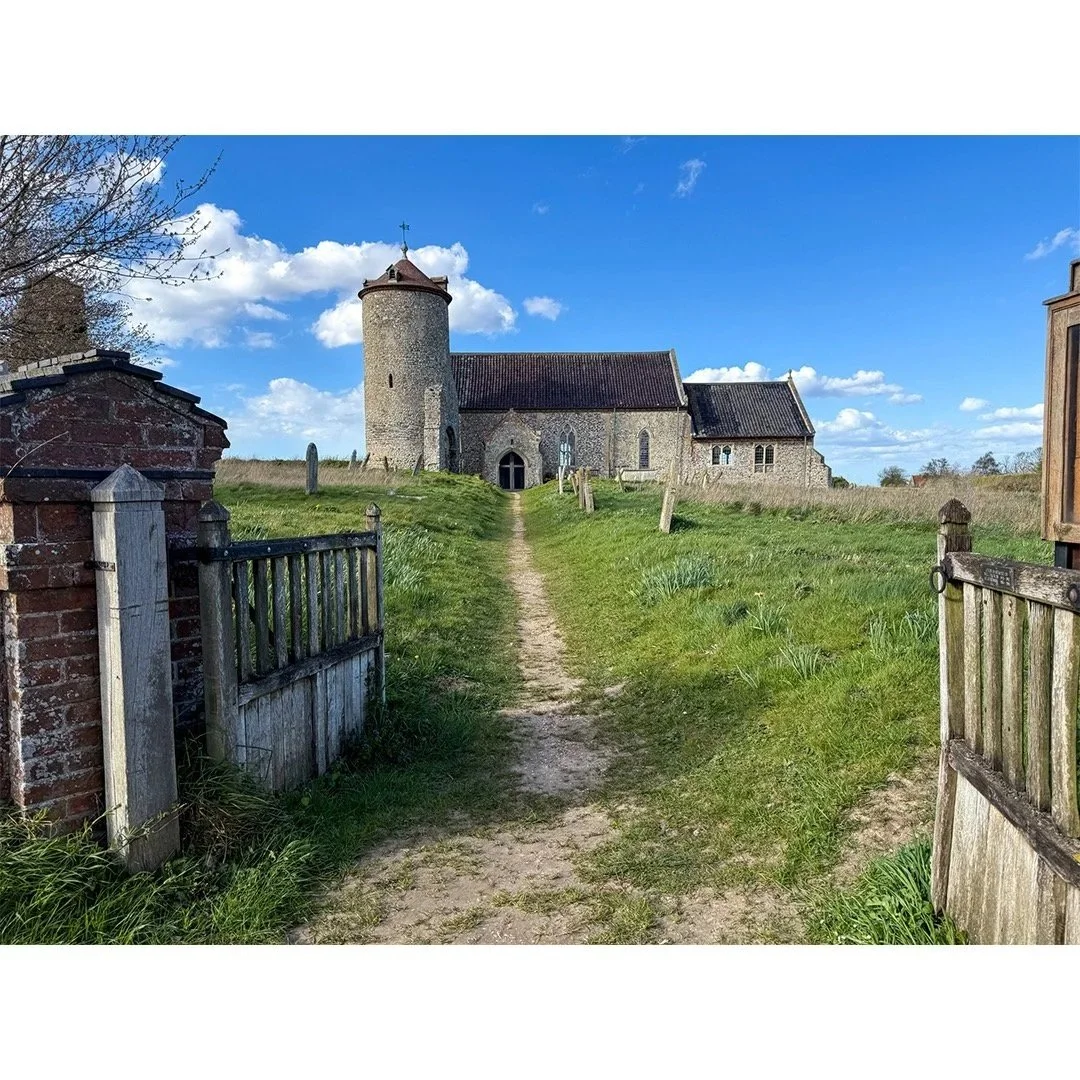
The Ground Beneath Us
Standing in the churchyard in Little Snoring, something shifted. A reflection on legacy, the honest accounting of a life, and what we choose to do with the finite time we have.
There is a village in England called Little Snoring. It is small and quiet and easy to miss. It is also where my family is from.
A few weeks ago I walked that land. I stood in the churchyard and read the names carved into stone, and some of those names were mine. Not mine exactly, but mine in the way that ancestry works, the slow accumulation of people who came before you and made decisions, built lives, loved people, left things behind, and eventually were laid to rest in the earth. I stood there in Little Snoring and felt something I am still trying to find the right words for. It was not grief exactly, and it was not joy. It was something more like weight. The good kind of weight. The kind that reminds you that you are not the beginning of the story.
I have been thinking about that weight ever since.
Legacy Is Not a Monument
Legacy is a word we throw around a lot, and I think we often reach for it in the wrong direction. We talk about legacy as something built at the end, something you leave behind after a long career or a big life, a final chapter that wraps everything up neatly. But standing in that churchyard, I did not think about endings. I thought about the middle. About all the ordinary days that came between birth and that stone marker. About the people who were loved by those people. About the ripple that starts with a single life and just keeps moving outward, long after the person who started it is gone.
Legacy is not a monument. It is a pattern of choices, repeated over time, that eventually becomes something larger than any single moment.
And that realization, quietly, gently, cracked me open a little.
The Full Accounting
Because when I started thinking about legacy, I could not stop at the good parts. I had to hold the whole thing. The connections I have made and the ones I have let go too soon. The people I showed up for and the ones I was too distracted or too proud or too afraid to meet where they were. The times I built something up and the times I, without meaning to, tore something down. Legacy is not a highlight reel. It is the full accounting.
There is something clarifying about that. Not comfortable, but clarifying. When you stand in a place like Little Snoring and feel the weight of the people who came before you, you cannot help but ask the honest question. What am I adding to this? What will the pattern of my choices look like, from the outside, when enough time has passed?
I do not ask that question to spiral into regret. I ask it because I think it is the most useful question any of us can carry.
Purpose Is Not a One-Time Discovery
This brings me back to purpose, which for me is never very far from any conversation worth having.
I have always believed that your job and your purpose are two different things. Your job is what you do. Your purpose is why you are here. And the older I get, the more convinced I am that purpose is not something you discover once and then simply execute. It is something you return to, again and again, especially when life shakes you loose from your routines and puts you somewhere unexpected, like Little Snoring on a quiet afternoon.
What I felt there was a pull. A reminder that my time here is finite and that the good I want to do is not abstract. It lives in specific interactions, in specific moments, in the specific people I choose to show up for fully. The ripple effect is not something that happens to you. It is something you participate in, consciously or not.
The question is just whether you are intentional about it.
The Legacy Is Already Being Written
I do not have a tidy conclusion to offer here. This one has been sitting with me, and I think that is the point. Some reflections are not meant to resolve. They are meant to stay with you, to keep asking their questions quietly while you go about your days.
But I will say this. If you have ever felt the pull of something bigger than your daily to-do list, the sense that you are here for a reason that goes beyond the measurable, pay attention to that. Do not wait until you are standing in a churchyard in Little Snoring to take it seriously. The impression you leave on the people around you is already forming. The legacy is already being written.
The only question worth asking is whether you are writing it with intention.
What does legacy mean to you right now, not someday, but today? That is the question I am sitting with. I would love to know what it brings up for you.

The Magic on the Other Side of Uncomfortable
We talk about comfort zones like they're something to escape. But what if the discomfort is actually the whole point?
I have said it before, and I will keep saying it: the conversations that stick with me the longest are the ones where someone says something so simply, so casually, that you almost miss how true it is.
That happened recently, and it got me thinking about comfort zones. Not in a motivational-poster kind of way. In a real, honest, this-is-actually-hard kind of way.
We Talk About Comfort Zones Like They're the Enemy
There is no shortage of content telling us to get out of our comfort zones. Push the edges. Embrace the discomfort. Lean in. And I get it — I really do. There is something important in that message. But I think we have oversimplified it to the point where it sounds like a switch you just flip, and then off you go into the brave new world.
It does not work like that.
The real version of stepping outside your comfort zone is messy and uncertain and sometimes genuinely scary. It is navigating a city you don't know with a paper map and no one to call. It is staying up late to learn a skill you need because there is no other option. It is walking into a room where you don't quite belong yet and deciding to stay anyway.
That's what it actually looks like. And the people who do it well are not fearless. They are just willing to move forward while the fear is still there.
Resilience Is Built in the Doing
Here's what I have come to understand about resilience: it is not a trait you either have or you don't. It is something that grows every time you get through something you didn't think you could.
The first time you adapt to something new and come out the other side, you file that away. You know something now that you didn't know before — which is that you can do hard things. And the next time something hard comes along, you have that reference point. It doesn't make the hard thing easier. It just makes you a little more certain that you'll survive it.
That's the compound interest of doing uncomfortable things. Each one builds on the last.
The Difference Between a Gamble and a Calculated Risk
One of the most useful frames I have picked up is the distinction between a gamble and a calculated risk. A gamble is throwing everything into the dark and hoping. A calculated risk is doing the honest work of assessing what you know, what you don't know, and what you're willing to lose, and then deciding to move forward anyway.
That distinction matters. Because not every bold move is reckless, and not every cautious move is wise. Sometimes the most calculated risk you can take is to step into something new before you feel ready, because waiting until you're ready is its own kind of gamble.
Adaptability Is Not a Personality Type
I think we sometimes treat adaptability like it belongs to a certain kind of person. The naturally flexible ones. The people who thrive on change. But that's not really how it works.
Adaptability is a skill, and like any skill, it gets stronger with practice. Every time you adjust to something new — a new role, a new environment, a new set of expectations — you are building your ability to do it again. The people who seem naturally adaptable are usually just the people who have done it enough times that it doesn't look like effort anymore.
And in the world we are living and working in right now, that skill is not optional. Change is not slowing down. The question is whether we meet it or wait for it to pass. Spoiler: it does not pass.
What Slowing Down Has to Do with All of This
Here is the part that might seem like a detour but really isn't: one of the most underrated forms of adaptability is the ability to slow down and actually pay attention to the people around you.
We move fast. We have to move fast. But in moving fast, we miss things. We miss the stories that the people right in front of us are carrying. We walk past wisdom every single day because we are too focused on getting somewhere to notice who we are walking past.
I have been thinking about this a lot lately — about the people in our lives who have already been through the things we are going through now. Who have already navigated reinvention, loss, uncertainty, and change. And instead of asking them what they know, we keep looking forward, assuming the answers are somewhere ahead of us.
They are not always ahead. Sometimes they are right there, sitting in the room with you, if you slow down enough to ask.
What I Keep Coming Back To
Getting out of your comfort zone is not about being brave in some cinematic, dramatic way. It is mostly just about showing up for the next thing, even when you are not sure how it is going to go. It is about building enough evidence over time that you can do hard things, so that when the next hard thing comes, you have something to stand on.
Resilience and adaptability are not destinations. They are habits. And they are built one uncomfortable moment at a time.
So if you are in one of those moments right now, good. It means something is happening.
Jenn Rinfret and I dug into this topic in Episode 30: Lead with Empathy, Adapt with Purpose.
Still in the Room: What Kevin Armstrong Taught Me About Winning Right Now
There are some conversations that end and you immediately know you need to just sit with them for a minute. My recent Coffey Talk with Kevin Armstrong was one of those. I don’t usually write summaries from my blogs, but more what my takeaways were…the thing is…my takeaways are a summary of the podcast. So…here ya go.
Kevin has been in the technology space for over 30 years. He has navigated the early internet, Y2K, 9/11, the 2008 economic collapse, the cloud boom, and now the AI era. When I asked him what word comes up when he looks back at all of it, he didn't hesitate. Grateful.
Not triumphant. Not exhausted. Grateful.
That word set the tone for everything that followed. And what followed was one of the more honest, grounded conversations I've had on this show about what it takes to build a career that lasts, and what it looks like to keep winning when the rules keep changing.
Kevin shared five principles he keeps coming back to. They're his, and I want to honor them as such, because I think they're worth sitting with whether you're in sales, in leadership, or just trying to figure out your next move.
Be Curious
Kevin leads with this one and there's a reason. He said people get stale, and I think he's right. When stress hits and uncertainty creeps in, it's easy to turn inward. To stop asking questions. To wait for someone to hand you the answer. But curiosity is what keeps you relevant. It's what keeps you in the conversation.
He talked about using multiple AI platforms every single day, not because he has to, but because he wants to know what they each do differently. That's not a technology habit. That's a mindset. He is genuinely interested in the world, and it shows up in every room he walks into.
I've been called contagiously curious more than once in my life and I've always taken it as a compliment. This conversation reminded me why I should keep it that way.
Be Prepared
Kevin called it the practice-to-performance ratio. In sports, preparation is everything. In sales and business, we have a habit of throwing people into performance without nearly enough practice. We wonder why deals fall apart and careers plateau.
He was direct about this: if you're not doing the work before you get in the room, you're the problem. Not the market, not the buyer, not the timing.
One of our culture fundamentals at my company is to be more prepared than anybody else in the room. I've lived by that principle, and I can tell you it opens doors. Kevin put language around something I've felt for years. Preparation isn't just about knowing your stuff. It's about being ready to add value the moment the conversation starts, even if it goes in a direction you didn't expect.
Have a Perspective
This one came with a line I won't forget: tell them something they don't already know.
Not your features. Not your pricing. Something that makes the other person in the room think differently about their own situation. That's perspective. And you build it by doing the work, studying the industry, understanding the outcomes your buyers are actually chasing, and caring enough to have a real point of view before you ever open your mouth.
Kevin said buyers don't care about your product. They care about going to sleep at night knowing their problems are handled. If you can speak to that, you're already ahead of most of the people in the room.
Understand Your Value Equation
Know thyself. Kevin said it plainly and called it a cheat code, and I think he's right.
He told a story about a guy named Paul Alley who walked into a new industry knowing nothing about the products, nothing about the ecosystem, but being one of the most likable, curious, and responsive people Kevin had ever worked with. Paul went from zero to club trip in year one. Not because he was the most technical. Because he knew exactly what he brought to the table and he showed up with that every single day.
That story stuck with me because I've seen it play out in my own career. I'm not the most technical person in most rooms I'm in. But I care, I follow through, and I show up prepared. That's my value equation. Knowing that, owning it, and not apologizing for it has served me well.
Kevin also said something important for anyone who's navigating a job loss or a career transition right now: lower your stress first. You cannot assess your value equation clearly when you're running on adrenaline and anxiety. Step back. Breathe. Then build the plan.
Be Responsive
Time kills all deals. Kevin said it and I felt it immediately, because it goes so far beyond sales.
He put it simply: more deals are lost to no decision than to competition. And the way you fight a no-decision is by removing every reason for delay that's on your side of the table. Get the email out. Send the follow-up. Deliver what you said you would. Don't make the other person work to keep the conversation alive.
Our intern said something to me early on that I loved: there's fortune in the follow-up. Kevin would absolutely agree.
What I'm Taking Into This Week
There was one constant message in Kevin’s thoughts: control what you can control. The market is uncertain. The job landscape is hard. AI is changing everything. But how curious you are, how prepared you show up, whether you have a real perspective, whether you know your own value, whether you respond when you say you will, those things are entirely in your hands.
Kevin closed by talking about the people he's most proud of in his career. Not the deals he closed or the revenue he generated. The people he watched succeed. The careers he got to be a small part of.
That's someone who knows their why. And it was a good reminder for the rest of us to figure out ours.
Go listen to the full episode. Kevin is the real deal. ☕
You Can't Download Community: On Giving, Asking, and Showing Up for Each Other
Nobody gets good at anything alone. The more time I spend in rooms with people who are generous with what they know, the more convinced I am that community isn't a perk of a career. It's the whole point.
Nobody gets good at anything completely on their own.
I know that sounds obvious. But I think a lot of us spend years quietly acting like it isn't true. We perform with confidence that we don't fully have yet. We hesitate to ask the question that might make us look like we don't belong in the room. We show up to networking events with a subtle mental scorecard, cataloging who might be useful, who we should get in front of, and what we might walk away with.
I've done it. I think most people have.
And then you spend enough time around people who don't operate that way, and something shifts.
What Generosity Actually Looks Like in Practice
I've been in enough rooms now to notice the difference between people who show up to give and people who show up to grab. And the thing is, it's not always obvious at first. Both can be charming. Both can be impressive. But over time, it becomes really clear which one you want to keep calling.
The people I keep calling are the ones who share what they know without making you feel like you owe them something. The ones who make an introduction because it's the right thing to do, not because they're keeping tabs. The ones who check in just to check in.
I always say that when I walk into a room, the question I want to be asking is what can I give here, not what can I get. That's not a humble brag. It's honestly a practice. Some days I'm better at it than others. But it's the posture I keep coming back to, because every time I've shown up that way, something good has happened. Not always immediately. Not always directly. But it comes back around.
I always say that some of my best learning doesn't happen in a session or a classroom. It happens in the conversation right before I walk into one. And that only happens because we actually show up. We travel from wherever we call home, and we share a zip code for a few days, and something about being physically in the same space with people who care about the same things just opens something up.
We Don't Have to Be the Expert in Everything
Here's something I find genuinely freeing about community: you don't have to know everything. You just have to know people who know things, and be the kind of person they want to call.
I came into my industry not knowing a fraction of what the people around me knew. I still don't. And I've learned more from conversations in hallways and side rooms and coffee lines than I ever could have learned trying to figure it all out alone. My best learning doesn't happen in a classroom. It happens in the conversation right before I walk into one.
That's not a gap. That's the whole system working the way it's supposed to.
The most experienced, most credentialed people I know are also often the most willing to ask for help. That's not a coincidence. At some point, you realize that asking good questions and admitting what you don't know isn't a liability. It's actually what makes people trust you. It's what makes them want to bring you in, keep you in the loop, and call you back.
We get by with a little help from our friends. I mean that literally. Not as a platitude. As an actual operating philosophy.
The Ripple Effect of Showing Up
One of the things I think about a lot is legacy. Not in a heavy or self-important way, just in the sense of what are we actually leaving behind in the rooms we've been in.
When you show up with intention, when you make the introduction that has nothing in it for you, when you share the thing you know with the person who needs it, when you take the time to encourage someone who's just starting out, you create a ripple you'll probably never fully see. That person goes on to do something. They help someone else. They pull someone into a room they didn't know they belonged in.
That's community doing what community is supposed to do. It's not a transaction. It's a living thing. And it only stays alive because people keep feeding it.
I've been on the receiving end of that generosity more times than I can count. People who didn't have to show up for me, who did anyway. And every time that happens, my job is to make sure I'm passing it forward, not just paying it back.
That's the deal. That's the whole thing.
A Note on Asking for Help
If you're someone who finds it hard to ask for help, I want to say something directly: asking is not a weakness. It is not an admission that you don't belong. It is one of the most honest things you can do in a professional relationship.
The people worth knowing will not think less of you for it. They will think more of you. And the people who don't, honestly, are probably not the ones you want to be learning from anyway.
None of us figured this out alone. And the ones who pretend they did are usually the loneliest people in the room.
A Huge Thank You
A huge thank you to Kim Dallefeld for coming on Coffey Talk and for the conversation that sparked all of this. Kim has been in the industry for more than 30 years, has earned more awards than I can list, and tells the best stories of anyone I know. She is the embodiment of “She Builds.” She has truly built it all.
You can tune in to the full episode on Apple Podcasts or wherever you listen to podcasts. If you prefer to watch your podcasts, you can watch this one on YouTube.
Thank you to Kim for your mentorship.

Purpose Isn't Something You Find. It's Something You Notice.
We've made purpose feel bigger and more elusive than it needs to be. But what if it's not out there waiting to be found? What if it's been showing up in your life for years — you just haven't called it that yet.
The Search That Keeps Coming Up Empty
I've been thinking about purpose a lot lately — maybe too much, if I'm being honest. I went through a stretch a few years back where I was genuinely convinced I was missing something. Like everyone else had received some memo that I hadn't, and if I just read the right book or asked the right question, it would finally click. I read the books. I asked the questions. And for a long time, nothing clicked.
What I've come to think now is that we've made purpose into this enormous, intimidating thing. A calling. A north star. Something cinematic. And because we've built it up that way, most of us walk right past it — because what we're actually living doesn't look like that. It looks ordinary. It looks like Tuesday.
What Purpose Actually Looks Like in Real Life
Here's what I mean. I have a friend who has probably talked a dozen people through job losses, breakups, and moments where they didn't know what to do next. She doesn't have a therapy practice. She doesn't have a podcast. She just has this quality — this ability to sit with someone in a hard moment without rushing them toward the exit. People call her. They always have. She's never once described that as her purpose, but I'd argue it's exactly that. She just hasn't named it yet.
That's the thing about purpose — it tends to be quieter and more consistent than we expect. It shows up in the roles you fall into without auditioning for them. The stuff people ask you for without thinking about whether it's a reasonable ask. I used to volunteer to write things for every group I was part of — the email, the recap, the thing that needed to be said but nobody knew how to say it. I didn't think of that as meaningful. I thought of it as just helping out. But when I look back, there's a pretty clear thread running through my life, and writing is most of it.
The Different Ways Purpose Shows Up
When I started paying attention to this, I noticed it shows up in pretty distinct ways depending on the person. Some people are natural community builders — they walk into a room and somehow, within a few months, there's a group chat and a recurring dinner and people who didn't know each other before now consider each other friends. Others are empathetic leaders, the kind of managers people remember for decades because they actually saw them as humans. Some are teachers in the truest sense — not necessarily in a classroom, but wherever they are, things click for people around them. There are builders who need to be making something or they get restless, and protectors who can't look the other way when something isn't right. Connectors who see the relationship between two people before either of them does. Mentors who keep investing in others long after there's any formal reason to. Truth tellers who say the uncomfortable thing, not to be difficult, but because they genuinely can't pretend not to see it. Stewards who quietly hold something together over years. Storytellers who help the rest of us understand what we just went through.
And then there are the people you see in volunteer spaces — showing up consistently, often without recognition, because something in them just can't not. Whatever their role, whatever their title, that's where you see who they actually are.
None of those require a title. None of them show up on a resume in a way that captures what they actually are. But you can feel them in how someone moves through the world, the same way, over and over again.
Why We Keep Missing It
I think what gets in the way is that we're waiting for something that feels significant enough to count. A role with a title. A moment of clarity. Something you could put on a slide and point to. And while we're waiting for that, the actual evidence of what matters to us keeps accumulating — quietly, unremarkably — in how we spend our time and who comes to us and what we can't seem to stop doing even when nobody's asking us to.
A Better Question to Ask Yourself
I'm not saying the search is pointless. It's not. Asking the question matters. But maybe instead of asking what am I supposed to do with my life, it's worth asking something smaller: what do people actually come to me for? Where do I keep showing up, even when it's inconvenient? What have I been doing for so long that I stopped noticing it?
And if you're still not sure , volunteer somewhere. Seriously. Put yourself in a room where nothing is required of you professionally and see what you naturally do. See who you gravitate toward. See what problems you can't walk past without trying to help. Purpose has a funny way of showing its hand when there's nothing else to perform for.
There's probably something in those answers. Not a revelation, just a direction. And sometimes that's enough to start with.
If this resonated, I think you'll love my conversation with Sam Bush, host of Ambush on Air. She sat down with me on Coffey Talk and openly shared her own journey to recognizing her purpose and what it looked like to finally live in it. It's a good one. You can listen on Apple Podcasts or wherever you get your podcasts, and if you prefer to watch, we're on YouTube too.
The Work That Comes Before the Title
A reflection on leadership, political trust, burnout, and building what a business needs before formal recognition arrives.
Leadership Is Not Announced
There is a version of leadership that happens quietly.
It does not start with a promotion. It starts with noticing something is not working and deciding to care enough to fix it.
My conversation with Michelle Serna reminded me how often we think recognition validates leadership. In reality, leadership usually shows up in the work long before anyone names it.
She described building roles that did not exist. But what struck me was not the boldness of that move. It was the discipline behind it. She proved value first. She built trust. She earned the space to formalize what she was already doing.
That reframed something for me.
Trust Before Authority
She kept coming back to political trust.
Have you earned enough trust to propose it?
That question lingers. Not because it is intimidating, but because it is honest.
Influence is not about visibility. It is about reliability. It is about showing up repeatedly and solving problems without needing applause. When you do that long enough, your voice carries weight.
I have been thinking about where I am building trust quietly in my own work. And where I may need to build more before asking for expansion.
Growth Requires Release
We also talked about something that rarely gets airtime. Letting go of what you built.
There is a certain pride in creating something from nothing. But growth demands surrender. You cannot scale if you insist on owning every decision.
That part challenged me.
It is easier to start something new than to release control of something you already built. Yet that is often the next evolution.
Burnout Is a Signal, Not a Weakness
We also acknowledged burnout. Not in a dramatic way. In a realistic one.
High achievers rarely stop. We just keep going until our body tells us otherwise.
Her reminder that they are not doing open heart surgery grounded the entire conversation. Perspective matters. Urgency is not the same as importance.
I am learning that margin is strategic. Rest is not indulgent. Saying no creates space to lead well.
Community Is the Multiplier
The strongest thread in this episode was not independence. It was community.
She talked about the importance of having people who tell you to take PTO. People who remind you who you are when you forget. People who let you say things out loud while you are still forming the thought.
Leadership can feel lonely. It does not have to be.
And that might be the most important lesson of all.
You can watch the episode HERE on YouTube

Innovation Starts With Listening
Innovation doesn’t always mean adding more. Sometimes it means listening closely and having the discipline to stop.
Innovation Is Not Always About More
The latest Coffey Talk episode, When Innovation Starts With Why: The Projo Story, features Charbel Mawad, founder of Projo. We talked about how Projo came to life not as a pitch or a product launch, but as a response to a real, everyday frustration and the discipline it takes to build with intention.
The conversation was a reminder that innovation doesn’t always mean adding more. Sometimes it means paying closer attention and knowing when to stop.
I walked away thinking less about product development and more about restraint. We talk so often about innovation as expansion. More features. More speed. More scale. What challenged my thinking here was the idea that innovation can also be about clarity and choice.
There is confidence in simplicity. There is leadership in restraint.
Frustration as a Signal
What resonated with me most was how this idea didn’t begin as a business plan. It started as a quiet frustration that refused to be ignored. That reframed something for me. Frustration is often treated as something to push through or work around. But sometimes it is a signal asking for attention.
Not every frustration needs to become a product. But some are worth listening to.
Designing for Real Life
Another takeaway for me was the importance of designing for how people actually live. Not ideal behavior. Not best-case scenarios. Real habits. Real routines.
Ease matters. Consistency matters. And sometimes the most meaningful innovation is the one that fits seamlessly into what already exists.
Knowing When to Stop
This conversation reinforced something I keep coming back to in leadership and life. Progress does not always come from doing more. Sometimes it comes from clarity. From choosing what not to add. From trusting that enough is enough.
That discipline applies far beyond products. It applies to schedules. To expectations. To growth.
Redefining Success
Success was never framed here as speed or scale alone. It was framed as usefulness. Impact. Longevity. That perspective felt grounding.
It reminded me that growth without intention can lead to burnout. But growth rooted in listening has a better chance of lasting.

Legacy Is Built in the Everyday
A reflection on legacy as lived experience. How showing up, integrating life and work, and choosing authenticity shape impact over time.
The Conversation That Sparked This Reflection
This reflection was sparked by a Coffey Talk conversation with Tiffany Allen, a leader, partner, advocate, and community builder whose perspective on legacy immediately shifted how I was thinking about impact. We talked about career, motherhood, mentorship, and the idea that legacy is not something you arrive at, but something that ripples outward through everyday choices.
You can listen to the full episode with Tiffany, but what follows is not a retelling of that conversation. It is what surfaced for me afterward. The parts that lingered. The ideas that quietly reframed how I think about leadership, integration, and the responsibility we carry simply by showing up as ourselves.
Legacy Is Not a Finish Line
Some conversations gently rearrange how you think. Not in a dramatic way. More like they settle in quietly and start changing how you notice things.
This one did that for me.
Legacy came up early in the conversation, but not in the way it usually does. Not as something you arrive at or earn. It showed up as something you create without realizing it, through the way you live, work, and treat people when no one is keeping score.
That reframed things for me. I realized how often we tie legacy to milestones, roles, or outcomes instead of patterns. The daily ones. The small choices. The tone we set. The consistency of how we show up when it would be easier not to.
Legacy, in that framing, is already happening. The question is whether we are paying attention to it.
Integration Over Perfection
Another idea that landed for me was integration. Not as a productivity concept, but as permission.
We spend so much time trying to balance roles as if they exist on separate scales. Professional over here. Personal over there. Leadership somewhere in between. The truth is, most of us are living them all at once.
What struck me was the honesty around that reality. Life does not pause for work, and work does not politely wait for life to settle down. They overlap. They bleed into each other. They shape each other.
There was something grounding about acknowledging that integration is not failure. It is reality. And when we stop fighting it, we often show up with more clarity and less guilt.
Leadership, in that sense, becomes less about control and more about alignment.
Being Yourself Is Not a Risk
One of the strongest undercurrents in this conversation was authenticity. Not the polished version. The lived one.
There was a reminder I needed to hear, even now. You do not need to become someone else to be effective. You do not need to sand down the parts of yourself that feel different or softer or more human.
Often, those are the parts people trust most.
I’ve seen this play out repeatedly in my own work. The moments that connect are rarely the most rehearsed ones. They are the ones rooted in truth. In experience. In showing up as yourself and letting that be enough.
Confidence does not always come from knowing everything. Sometimes it comes from knowing who you are.
Community Carries Us When We Cannot
The conversation also surfaced something I believe deeply. We are not meant to do this alone.
There are seasons when you are strong enough to carry yourself and others. There are seasons when you are not. Community bridges that gap.
Not in a performative way. In a real one. The kind where someone notices. Where support is offered without being asked. Where presence matters more than advice.
Legacy shows up here, too. In who you stand beside. In who you allow to stand beside you. In the environments you help create simply by being there.
What I Took With Me
This conversation reminded me that leadership is not always loud. Legacy is not always visible. And growth is rarely linear.
It happens in kitchens and conference halls. In quiet encouragement. In choosing yourself again and again, even when it feels uncomfortable.
And most of all, it happens when we stop waiting for permission to be who we already are.
When Slowing Down Becomes Clarity
A reflection on leadership, slowing down, and how honest self-inventory creates clarity, confidence, and more intentional choices.
Slowing Down Is Not a Step Backward
There’s a belief many of us carry, especially in leadership, that slowing down means falling behind.
That if we pause long enough to reflect, we’re losing momentum. That clarity comes from movement, not stillness. That progress requires urgency.
My conversation with Maggie Coulter challenged that belief in a quiet but lasting way.
What came through clearly was this. Slowing down isn’t a step backward. It’s often the moment clarity finally shows up.
Not clarity that demands a dramatic change or a sweeping reinvention. But the kind that helps you see what’s already working, what you’ve learned, and where your attention might be needed next.
Taking an Honest Inventory as a Leader
One of the most practical ideas we talked about was the importance of honest inventory.
Not inventory as self-criticism.
Not inventory as a list of everything you should fix.
But inventory as awareness.
Seeing What You’re Doing Right
Leadership reflection often skips this part. We rush past what’s working and focus only on what feels lacking.
But celebrating what you’ve learned and what you’ve already overcome matters. Those experiences shape how you lead today, whether you acknowledge them or not.
Naming What Needs Attention Without Judgment
Maggie’s work is rooted in the belief that leaders are not broken. Nothing is inherently wrong with them.
From that place, identifying areas for growth doesn’t feel like failure. It feels like intention.
When reflection is grounded in respect for who you already are, improvement becomes thoughtful instead of reactive.
Every Moment Is the Moment
At one point in the conversation, Maggie said something that impacted me.
“Every moment is the moment.”
She shared how her cancer journey forced her to live with the belief that her timeline might be limited. That awareness shaped the choices she made and the changes she was willing to pursue. She didn’t wait for certainty. She made decisions based on how she wanted to live the time she believed she had left.
That perspective stayed with me.
It made me wonder what might shift if I lived with that same awareness. Not from fear, but from intention.
What if I didn’t assume tomorrow was guaranteed?
What if I treated today as something worth showing up for fully?
Would I be more deliberate about how I spend my energy?
Could I be more honest about what’s no longer aligned?
How can I be more active in creating a life I actually want to live instead of floating through while it quietly creates itself?
Leading Without Believing You’re Broken
What I find especially powerful about Maggie’s work is how she creates leaders who don’t believe something is wrong with them.
She holds space for people to slow down, reflect, and reconnect with their own wisdom. Not to fix themselves. Not to become someone else. But to trust what they already carry.
That kind of leadership development is grounding. It builds confidence without forcing certainty. It replaces urgency with clarity.
And it reminds us that leadership doesn’t always require more speed or more answers.
Sometimes it asks for a pause. And a breath.
And an honest look at where you are right now.
Because slowing down doesn’t mean you’re stuck.
It might mean you’re finally paying attention.
A Question to Sit With
Where might slowing down help you see more clearly right now?